Search This Blog

Tuesday, November 1, 2022

Twitter - - - to - - - Mastodon - what ??

Do you have a Twitter handle ? – how often do you tweet ?and how many followers do you have on Twitter ?  .. .. .. for sure, you know of the change in ownership !

The new owner - Elon Musk has dissolved Twitter's board of directors - cementing his control over the social media platform.  The multi-billionaire will be its chief executive after buying the company last week, ending months of back and forth over the $44bn (£38.3bn) deal. He has moved quickly to put his mark on the firm, which is used by famous people,  politicians and journalists around the world.  The reforms he is contemplating include changes for how Twitter verifies accounts, as well as job cuts. Top executives have already been removed, as Mr Musk brings in high profile allies to the company. There are fears that there could be serious job cuts too !! Along with taking the top role at Twitter, Mr Musk is chief executive of electric car maker Tesla and rocket company SpaceX. However, he has indicated that his position at the social media company may be temporary.


Moving away, they  look like Elephants to us - The American Mastodon became extinct by 13,000 years ago. The mastodon family diverged from other elephant-like relatives in Miocene times.  The American Mastodon was wide-spread across all of North America from Alaska to central Mexico. Other mastodon species were widely distributed throughout the world, and mastodon fossil remains are locally common and well-preserved in Pliocene and Pleistocene age deposits. Complete or near complete skeletons have been recovered, some even with preserved hair.

A mastodon (mastós 'breast' + odoús 'tooth') is any proboscidean belonging to the extinct genus Mammut (family Mammutidae) that inhabited North and Central America during the late Miocene or late Pliocene up to their extinction at the end of the Pleistocene 10,000 to 11,000 years ago. Mastodons lived in herds and were predominantly forest-dwelling animals. They generally had a browsing diet, distinct from that of the contemporary Columbian mammoth, which tended towards grazing.  M. americanum, the American mastodon, and M. pacificus, the Pacific mastodon, are the youngest and best-known species of the genus. Mastodons disappeared from North America as part of a mass extinction of most of the Pleistocene megafauna, widely believed to have been caused by a combination of climate changes at the end of the Pleistocene and overexploitation by Paleo-Indians.

A Dutch tenant farmer found the first recorded remnant of Mammut, a tooth some 2.2 kg (5 lb) in weight, in the village of Claverack, New York, in 1705. The mystery animal became known as the "incognitum". In 1739 French soldiers at present-day Big Bone Lick State Park, Kentucky, found the first bones to be collected and studied scientifically. They carried them to the Mississippi River, from where they were transported to the National Museum of Natural History in Paris.  People started referring to the "incognitum" as a "mammoth", like the ones that were being dug out in Siberia  – in 1796 the French anatomist Georges Cuvier proposed the radical idea that mammoths were not simply elephant bones that had been somehow transported north, but a species which no longer existed. Johann Friedrich Blumenbach assigned the scientific name Mammut to the American "incognitum" remains in 1799, under the assumption that they belonged to mammoths.  In 1817 Cuvier named the "incognitum" Mastodon.

Twitter now has a new owner and the social network is awash in speculation of what Elon Musk will do with it. Some Twitter users are declaring that they plan to find an alternative rather than stick around and find out — and some have already left. In case, you too have plans of shifting there are some  possible alternatives. Most don’t have the size and scale of Twitter, and it’s hard to say if any of them will attract enough followers to give it a run for its money. Some of them ape the real-time feed of Twitter, but most provide a different take on what a social network can look like. Depending on what you get out of Twitter — perhaps you use it to broadcast your work or maybe you use it to keep up with news events, or maybe you use it to connect with other Twitter users — you might prefer some of these options over others.

Mastodon is sort of a decentralized version of Twitter. You don’t join Mastodon per se; you join a specific server run by an organization, individual, or group of individuals!. Confusing !  On Mastodon, you post toots (rather than tweets) with a 500-word limit per post; you can attach images, a video, or an audio file. Hashtags are encouraged to help people find your toots, and there are apps for iOS and Android devices – not sure, how to join with desktop / laptop computer.  To sign up, you go to join M and click on the Servers link at the top of the page to choose which server you want to sign up for. You can choose to search by topic and / or language. Some will let you join immediately; others have waiting lists. You might want to start with one of the more populated ones, such as mastodon.social (which at last count had about 779 thousand users).

The best way to get started with Mastodon is through apps for iOS and Android, but many third-party apps are also available. Mastodon is free and open-source software for running self-hosted social networking services.  Each user is a member of a specific Mastodon instance, which can interoperate as a federated social network, allowing users on different nodes to interact with each other. This is intended to give users the flexibility to select a server whose policies they prefer, but keep access to a larger social network.  Mastodon was originally created by Eugen Rochko and announced on Hacker News in October 2016.


The Mastodon mascot is an animal with a trunk, resembling a mastodon or mammoth, sometimes depicted using a tablet or smartphone. Messages posted using the software are known as "toots". 

There are signs of a small but growing Twitter exodus underway following Elon Musk’s closure of the deal to buy the social media platform.  While many Twitter users are taking a wait-and-see approach and may not have fully deleted their accounts at this time, a sizable number of people are currently checking out Twitter alternatives. According to some media reports,  Mastodon has gained more than 70,000 new sign-ups on Friday, the day after the Musk Twitter takeover completed. And this weekend, the official Mastodon mobile app saw a record number of downloads !    

Technology changes so fast that often people are swept aside by its speed !  

With regards – S. Sampathkumar
1st Nov 2022.


rain drops on a leaf !!


கம்பர் வாழ்ந்த காலத்தில் மக்களின் சிறப்பு பற்றி ஒரு கதை கேள்விப்பட்டு இருப்பீர்கள்.  ஒரு மாலை நேரம் ஆற்றங்கரை ஓரம் தென்னந்தோப்பில் நீண்ட கீற்றுகளின் நிழலில் கம்பர் உலா சென்றாராம்.   உழவன் ஒருவன் கபிலை  ஏற்றத்தில் நீர் இறைத்துப் ஏனைய விவசாயிகள் தம் மனிவியுடன்  பாடிக் கொண்டிருந்தனர்.

“மூங்கில் இலைமேலே...” என்றான் முதல்வன்; இரண்டாமவன் - “தூங்கும் பனி நீரே...” என மற்றொரு உழவன்  . “தூங்கும் பனி நீரை...” எனும் பொது அந்தி இருள் சூழ்ந்தது. கம்பர் பாடலில் மனதை பறிகொடுத்து  அடுத்த வரி என்னவாக இருக்கும்? என யோசிக்க, மறுநாள் பாட்டை தொடர்ந்த உழவர்கள் -  வாங்கு கதிரோனே!"  என,   "என்ன அழகான  சொல் நயம்.   மூங்கில் இலையை, பனித்துளி சூரியனோடு   பொருத்திக் காட்டியது சிறப்பு .. .. என போற்றினாராம் கவிச்சக்கரவர்த்தி கம்பர்.. 


எமக்கு தொழில் கவிதை என முழங்கிய பாரதி வாழ்ந்த மண்ணில், வாழ்ந்தாலும், நமக்கு ஒரு வரி கவிதை கூட வராது !  - இன்று பெய்த மழையில் - புல்லின் மேல் தங்கிய மழை துளிகள் படம் .. .. .. .. 

Continents Shift theory - Alfred Wegener !

I have seen this leftarm seamer bowl well – was surprised to find that he has played 59 tests and taken 246 wickets, he is yet to play ODI or T20Is.   Neil Wagner is   South African born, but plays for New Zealand  after waiting for 4 years.    A match haul of 8 for 126 in a 40-run victory over India at Eden Park in February 2014 ensured him a regular place.  No post on Cricketer but on another namesake (thanks to Geologist Prof Mu Ramkumar)

Kumari Kandam, a mythical continent, is  believed to be lost with an ancient Tamil civilization, supposedly located south of present-day India in the Indian Ocean.  In the 19th century, some European and American scholars speculated the existence of a submerged continent called Lemuria to explain geological and other similarities between Africa, Australia, the Indian subcontinent and Madagascar. A section of Tamil revivalists adapted this theory, connecting it to the Pandyan legends of lands lost to the ocean, as described in ancient Tamil and Sanskrit literature. According to these writers, an ancient Tamil civilisation existed on Lemuria, before it was lost to the sea in a catastrophe. Remember reading a serial story in my school days  on Lemuria by Pushpa Thangathurai in Dinamani Kathir (thought there was too much of sexy descriptions) 


The hero of the post was no ordinary man – with his multidisciplinary calling, started out as an astronomer, being correct when he stated that craters on the Moon are the work of meteorites and not of volcanoes; later, he combined meteorological studies in Greenland with his geological theories, and did not have a steady job until after the age of 40, when an Austrian University created a post for him. He was a difficult scientist to pigeonhole. And for geologists he was an outsider who dared to question the foundations of their science, so most of them rejected his ideas with the backing of figures like Einstein, who wrote the prologue to a book that ridiculed him.

If there were a “geographical forecast”, analogous to the predictions of meteorologists, it would show how over the next 100 million years the Atlantic Ocean will continue to expand, until it is much larger than the Pacific. And also how Africa will merge with Europe, with the Mediterranean disappearing and a mountain range emerging in its place to compete with the Himalayas—although Everest and its neighbouring mountains will still continue to rise. If this sounds shocking today, you should put yourself in the shoes of geologists back in 1912, who were much more troubled when a 32-year-old German meteorologist, launched his theory of continental drift. Thanks to his hypothesis, any child today knows that the continents are slowly moving and were joined together at the time when the dinosaurs appeared.

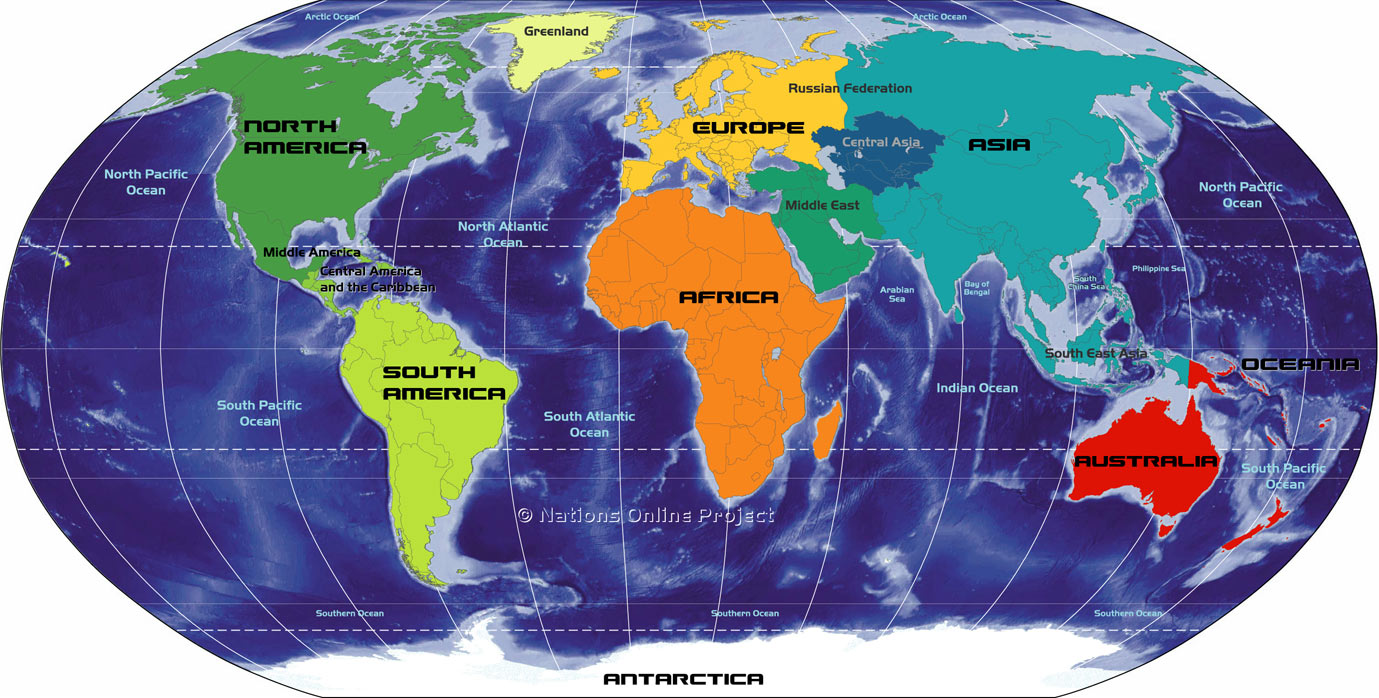
Ever since the appearance of the first world maps, many people had noticed how well Brazil fits snugly under the belly of Africa. Alfred Wegener (1880 – 1930) looked for other connections. He found research on identical fossils on the coasts of Africa and South America, something for which geologists, convinced that the world map was immutable, had offered a more implausible explanation: land bridges that had vanished after permitting animals and plants to travel from one continent to another.

In addition, thanks to geolocation satellites, we are now able to detect that Europe and North America are moving apart, although at the same speed that a fingernail grows: two metres in a lifetime. Today we have all learned at school—or even before, in cartoons—the theory of continental drift. But Wegener died in 1930, long before his success was recognised.  But no matter how many bridges were dreamt up, the most renowned geologists were unable to explain why in Africa there are marking of glaciers or why near the North Pole there are remains of tropical vegetation in the form of coal. For Wegener this was only possible if the current continents were once concentrated around the equator forming a supercontinent, which broke apart some 200 million years ago and which he called Pangaea. Nobody had thought of relating all these facts, but Wegener saw in them the evidence of continental drift, thanks to his interest in different sciences.


Alfred Lothar Wegener  was a German climatologist, geologist, geophysicist, meteorologist, and polar researcher. During his lifetime he was primarily known for his achievements in meteorology and as a pioneer of polar research, but today he is most remembered as the originator of continental drift hypothesis by suggesting in 1912 that the continents are slowly drifting around the Earth. His hypothesis was controversial and widely rejected by mainstream geology until the 1950s, when numerous discoveries such as palaeomagnetism provided strong support for continental drift, and thereby a substantial basis for today's model of plate tectonics. Wegener was involved in several expeditions to Greenland to study polar air circulation before the existence of the jet stream was accepted. Expedition participants made many meteorological observations and were the first to overwinter on the inland  

In 1905 Wegener became an assistant at the Aeronautisches Observatorium Lindenberg near Beeskow. He worked there with his brother Kurt, two years his senior, who was likewise a scientist with an interest in meteorology and polar research. The two pioneered the use of weather balloons to track air masses.  In that same year 1906, Wegener participated in the first of his four Greenland expeditions, later regarding this experience as marking a decisive turning point in his life. The Denmark expedition was led by the Dane Ludvig Mylius-Erichsen and charged with studying the last unknown portion of the northeastern coast of Greenland. During the expedition Wegener constructed the first meteorological station in Greenland near Danmarkshavn, where he launched kites and tethered balloons to make meteorological measurements in an Arctic climatic zone.  

As an infantry reserve officer Wegener was immediately called up when the First World War began in 1914. On the war front in Belgium he experienced fierce fighting but his term lasted only a few months: after being wounded twice he was declared unfit for active service and assigned to the army weather service. This activity required him to travel constantly between various weather stations in Germany, on the Balkans, on the Western Front and in the Baltic region. Nevertheless, he was able in 1915 to complete the first version of his major work, Die Entstehung der Kontinente und Ozeane (“The Origin of Continents and Oceans”).  Interest in this small publication was however low, also because of wartime chaos

Wegener's last Greenland expedition was in 1930. The 14 participants under his leadership were to establish three permanent stations from which the thickness of the Greenland ice sheet could be measured and year-round Arctic weather observations made. They would travel on the ice cap using two innovative, propeller-driven snowmobiles, in addition to ponies and dog sleds. Wegener felt personally responsible for the expedition's success, as the German government had contributed $120,000 ($1.5 million in 2007 dollars).  

On 24 September, although the route markers were by now largely buried under snow, Wegener set out with thirteen Greenlanders and his meteorologist Fritz Loewe to supply the camp by dog sled. During the journey, the temperature reached −60 °C (−76 °F) and Loewe's toes became so frostbitten they had to be amputated with a penknife without anaesthetic. Twelve of the Greenlanders returned to West camp.  Expedition member Johannes Georgi estimated that there were only enough supplies for three at Eismitte, so Wegener and Rasmus Villumsen took two dog sleds and made for West camp.   They took no food for the dogs and killed them one by one to feed the rest until they could run only one sled. While Villumsen rode the sled, Wegener had to use skis, but they never reached the camp: Wegener died and Villumsen was never seen again. After Wegener was declared missing in May 1931, and his body found shortly thereafter, Kurt Wegener took over the expedition's leadership in July, according to the prearranged plan for such an eventuality.

This expedition inspired the Greenland expedition episode of Adam Melfort in John Buchan's 1933 novel A Prince of the Captivity.  Wegener died in Greenland in November 1930 while returning from an expedition to bring food to a group of researchers camped in the middle of an icecap.  He supplied the camp successfully, but there was not enough food at the camp for him to stay there. He and a colleague, Rasmus Villumsen, took dog sleds to travel to another campone which they never reached.   

Original world maps created by Alfred Wegener showing Pangaea and the continents drifting apart. Its spatial and temporal classification corresponds to his conception at that time, not to the later proven positions and geological epochs. Alfred Wegener first thought of this idea by noticing that the different large landmasses of the Earth almost fit together like a jigsaw puzzle. The continental shelf of the Americas fits closely to Africa and Europe. Antarctica, Australia, India and Madagascar fit next to the tip of Southern Africa. But Wegener only published his idea after reading a paper in 1911 which criticised the prevalent hypothesis, that a bridge of land once connected Europe and America, on the grounds that this contradicts isostasy.  In 1915, in the first edition of his book, Die Entstehung der Kontinente und Ozeane, written in German, Wegener drew together evidence from various fields to advance the theory that there had once been a giant continent, which he named "Urkontinent" (German for "primal continent", analogous to the Greek "Pangaea”.   

Interesting !

 
With  regards – S. Sampathkumar
1st Nov. 2022.


when beer flowed on the road .. ..

December 2015 dawned  differently – disastrously for Chennai – it rained and the incessant rains tormented people – killing a few; damaging property of thousands of its residents – putting them to untold hardships.  None would have imagined that water would flow over Saidapet bridge and would divide the city into two .. making it inaccessible to cross-over.  Chennai floods were a nightmare !

A flood is an overflow of water (or rarely other fluids) that submerges land that is usually dry. In the sense of "flowing water", the word may also be applied to the inflow of the tide. The European Union (EU) Floods Directive defines a flood as a covering by water of land not normally covered by water. Flooding may occur as an overflow of water from water bodies, such as a river or lake, in which the water overtops or breaches its confinement,  resulting in some of that water escaping its usual boundaries.   Floods can also occur in rivers when the flow rate exceeds the capacity of the river channel, particularly at bends or meanders in the waterway. Some floods develop slowly, while others such as flash floods, can develop in just a few minutes and without visible signs of rain.

The word ‘flood’ is defined in the Concise Oxford English Dictionary, 8th edition (1990) as : “…1  an overflowing or influx of water beyond its normal confines, esp. over land; an inundation. b the water that overflows. 2  an outpouring of water; a torrent (a flood of rain)…” Particularly in the context of insurance contracts, Stroud’s Judicial Dictionary, 5th edition (1986) defines the word ‘flood’, in reference to Young v. Sun Alliance and London Insurance, [1977] 1 W.L.R. 104, an English case decided by the Court of Appeal, and reads as follows:

 “Flood” in an insurance policy meant a large movement or irruption of water, and did not cover mere seepage from a natural source...”   Simply put, a flood may be described as overflow of water over land. Floods can be broadly divided into the following categories: coastal floods, fluvial floods (river floods), and pluvial floods (surface floods).

The Horse Shoe Brewery was an English brewery in the City of Westminster that was established in 1764 and became a major producer of porter, from 1809 as Henry Meux & Co. The brewery  closed down  in 1921.

In the early nineteenth century the Meux Brewery was one of the two largest in London, along with Whitbread. In 1809 Sir Henry Meux purchased the Horse Shoe Brewery, at the junction of Tottenham Court Road and Oxford Street. Henry Meux emulated his father's large vat, and constructed a wooden vessel 22 feet (6.7 m) tall and capable of holding 18,000 imperial barrels.Eighty long tons (eighty-one metric tons) of iron hoops were used to strengthen the vat.Meux brewed only porter, a dark beer that was first brewed in London and was the most popular alcoholic drink in the capital. Porter was left in the large vessels to mature for several months, or up to a year for the best quality versions.


The London Beer Flood was an accident at Meux & Co's Horse Shoe Brewery, London, on 17 October 1814. It took place when one of the 22-foot-tall (6.7 m) wooden vats of fermenting porter burst. The pressure of the escaping liquid dislodged the valve of another vessel and destroyed several large barrels: between 128,000 and 323,000 imperial gallons of beer were released in total.

The resulting wave of porter destroyed the back wall of the brewery and swept into an area of slum dwellings known as the St Giles rookery. Eight people died, five of them mourners at the wake being held by an Irish family for a two-year-old boy. The coroner's inquest returned a verdict that the eight had lost their lives "casually, accidentally and by misfortune". The event nearly bankrupted the brewery; it avoided collapse after a rebate from HM Excise on the lost beer. The brewing industry gradually stopped using large wooden vats after the accident. The brewery moved in 1921, and the Dominion Theatre is now where the brewery used to stand. Meux & Co went into liquidation in 1961.

At around 4:30 in the afternoon of that fateful day, George Crick, Meux's storehouse clerk, saw that one of the 700-pound (320 kg) iron bands around a vat had slipped. The 22-foot (6.7 m) tall vessel was filled to within four inches (ten centimetres) of the top with 3,555 imperial barrels of ten-month-old porter, weighing approximately 32 long tons.  As bands slipped off the vats two or three times a year, Crick was unconcerned. He told his supervisor about the problem but was told "that no harm whatever would ensue” !!!

The force of the liquid's release knocked the stopcock from a neighbouring vat, which also began discharging its contents; several hogsheads of porter were destroyed, and their contents added to the flood.  Some of the bricks from the back wall were knocked upwards and fell onto the roofs of the houses in the nearby Great Russell Street. That beer wave   destroyed two houses and killed people by drowning them.  All those in the brewery survived, although three workmen had to be rescued from the rubble !

As the coroner's inquest reached a verdict of an act of God, Meux & Co did not have to pay compensation.Nevertheless, the disaster—the lost porter, the damage to the buildings, and the replacement of the vat—cost the company £23,000. After a private petition to Parliament, they recovered about £7,250 from HM Excise, saving them from bankruptcy. As a result of the accident, large wooden tanks were phased out across the brewing industry and replaced with lined concrete vessels.

When beer flows on road, who cares for human lives ? – so much so for the civilised country that ruled the globe. 

With regards – S. Sampathkumar
17th Oct 2022.