Search This Blog

Friday, February 18, 2022

Nithya Kalyani

 ஒவ்வொரு பூக்களுமே சொல்கிறதே !!  -  

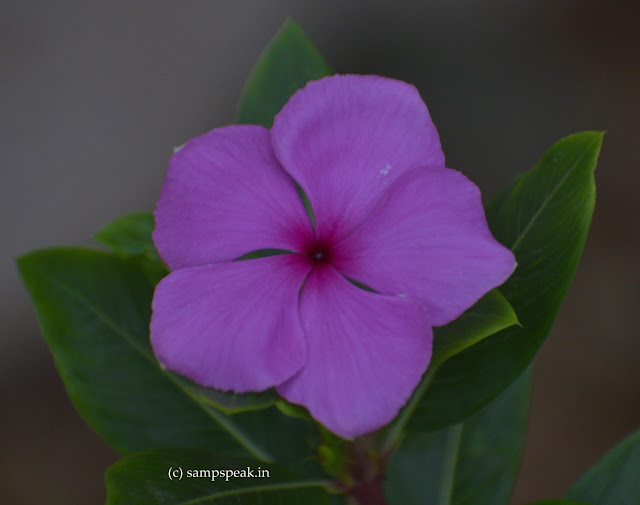
Perhaps one may not be able to identify hearing ‘Vinca rosea’ that has a name as ‘Nayanathara’ – most likely you have this beautiful flowering plant ‘Nithyakalyani’. 

Catharanthus roseus, commonly known as bright eyes, Cape periwinkle, graveyard plant, Madagascar periwinkle, old maid, pink periwinkle, rose periwinkle,  is a species of flowering plant in the family Apocynaceae. It is native and endemic to Madagascar, but grown elsewhere as an ornamental and medicinal plant.   It was formerly included in the genus Vinca as Vinca rosea. 

நித்ய கல்யாணி, நயனதாரா அல்லது பட்டிப்பூ என்றும் சுடுகாட்டுப்பூ (பூச்செடி) என்றும் அழைக்கப்படும் செடி,  மடகாஸ்கரில்   மட்டுமே காணப்பட்ட ஒருவகைச் செடியாக இருந்தது. பின்னர் இது வெப்பமண்டலப் பகுதிகளுக்கும், மென்வெப்பமண்டலப் படுதிகளுக்கும் பரவியது.  


Namibia Elephant exports !

Gold steadied on Feb 17 in international markets going near an eight-month high touched earlier this week, as the US dollar and Treasury yields dipped on less hawkish-than-feared Federal Reserve minutes, and as the Ukraine crisis boosted demand for the safe-haven metal.  At the Multi-Commodity Exchange (MCX), gold contracts were trading marginally lower by 0.05 percent at Rs 49,591 for 10 grams at 9.26am and silver shed 0.42 percent to trade at Rs 63,036 a kilogram.

No post on Gold and Silver but on Exports .. .. of a very precious one !!

In a  major trade deal implemented by the Shri Narendra  Modi Government, India and the United Arab Emirates (UAE) will officially sign a Comprehensive Economic Partnership Agreement (CEPA) today. Negotiations on the deal have been completed in record time, having been officially launched in Sept 2021. Today our honble PM is hosting   a bilateral summit at which the trade agreement between the two countries will be signed by commerce and industry minister Piyush Goyal and the UAE’s minister of economy Abdulla bin Touq Al Marri.  The UAE is India’s third trading partner globally, after the United States and China. Bilateral trade between India and the UAE was worth $43.3 billion as of 2020-21, and is spread across thousands of traded items. In 2019-20, the pre-pandemic year, trade between the two countries was estimated at $59 billion. The upcoming deal will be an ‘early harvest’ component of a far more comprehensive trade and economic partnership deal in the future.  


Elephants of Namibia .. – desert elephants, not a distinct species but  African bush elephants (Loxodonta africana) that have made their homes in the Namib and Sahara deserts in Africa.  Desert-dwelling elephants were once more widespread in Africa than they are now and are currently found only in Namibia and Mali. They tend to migrate from one waterhole to another following traditional routes which depend on the seasonal availability of food and water. They face pressure from poaching and from changes in land use by humans.  The Kunene Region in the northwest of Namibia is an area of mostly sandy desert, rocky mountains and stony plains which covers about 115,154 square kilometres (44,461 sq mi).  The desert elephants were absent from the southern Kunene Region during the war for independence. They moved north for safety, returning to the Ugab River in the mid 1990s by which time many indigenous people had moved into the area following Namibia's independence. Many of these new residents had no experience of living with wild elephants.

                     Namibia claims its elephant population has increased considerably over the last few decades – though many doubt this claim. There could be far fewer elephants than the 16,000 to 20,000 Namibia claims.   “Falsifying elephant populations statistics and exaggerating human-wildlife conflict can be used by governments to generate revenue from inflated hunting quotas, justify sales to zoos or hunting farms and initiate ivory-generating culls. Corruption is now as big a threat to elephants as poaching.”

Last year, Namibia  sold off 57 live elephants at an auction which it said was aimed at reducing populations in areas affected by drought and conflict with humans. The country raised $537,000 from the sale  - the  number represented just a third of the total of 170 elephants the African nation had hoped to sell, according to the environment ministry.   42 of those pachyderms will be exported to international destinations that the government did not disclose. The other 15 will remain in Namibia but under private ownership !

Namibia says the auction helped it strike a balance between the conservation of elephants and management of the risks they pose when they encroach onto land used by humans.  Now Namibia is in the process of capturing 57 wild elephants sold last year at auction, according to a statement today from the country’s Ministry of Environment, Forestry and Tourism.  To the consternation of environmental groups and elephant advocates, Namibia had announced in December 2020 that it would auction off 170 of its elephants to reduce populations that were increasingly clashing with humans. It says it has an estimated 24,000 elephants.

Though they sold 57 elephants through a successful bidding, the pachyderms are yet to be rounded up from the wild.   Thirty-seven elephants have already been captured, today’s statement says, including 22 for export. It said nothing about where the elephants will go, other than that it won’t be China.  The Namibian Environment Ministry claimed that the clause in sale agreement prohibits providing destination details.  

Selling wild elephants into captivity has long been controversial, both because there’s debate about whether such highly mobile, intelligent animals can live fulfilling lives in captivity and because breaking up herds damages relationships among close-knit family members.  “Elephants have basic needs for stimulating ecological and social environments and for the freedom to exercise choice over their foraging options and companions. These needs cannot be met under captive conditions,” said an Elephant care group. 

A Namibian journalist John Grobler and a friend took this drone footage of the farm where 22 wild elephants are being kept awaiting export.   They stated that Calves are visible in drone footage of a farm where the 22 captured elephants slated for export are being held.   He says he worries that more of the elephants may be pregnant and that the stress of captivity may trigger premature births. 

The international wildlife treaty that regulates the export of wild African elephants, CITES, was amended in 2019 to bar elephants in Botswana, Zimbabwe, Namibia, and South Africa from being exported to any country where the animals don’t or haven’t lived in the wild unless there’s a proven conservation benefit. That almost certainly rules out sales to zoos in, for example, China and the United States.

With regards – S. Sampathkumar
18th Feb 2022. 

Meermin slave mutiny !! - clemency of British

History written by supporters would glorify Tigers & Jackals – not only as powerful but as kind and merciful too .. .. .. British East India came to India as traders, raised their relationship with Kings, made the Nation a colony and treated Kings as vassals – and domineered major part of the world – traded not only species but ‘humans’ as well – treating people as slaves. 

Meermin was an 18th-century Dutch cargo ship of the hoeker type, one of many built and owned by the Dutch East India Company. She was laid down in 1759 and fitted out as a slave ship before her maiden voyage in 1761, and her career was cut short by a mutiny of her cargo !  They had been sold to Dutch East India Company officials on Madagascar, to be used as company slaves in its Cape Colony in southern Africa. Half her crew lost their lives in the mutiny; the mutineers deliberately allowed the ship to drift aground off Struisbaai, now in South Africa, in March 1766, and she broke up in situ.

The Malagasy are an Austronesian ethnic group native to the island country of Madagascar. Traditionally the population have been divided by subgroups (tribes or ethnicities).  

Between 1658 and 1799 the Dutch East India Company bought and transported approximately 63,000 enslaved people to its Cape Colony in southern Africa, now part of South Africa. In Dutch, the company's name was Vereenigde Oost-Indische Compagnie: abbreviated as  VOC, the company's initials were used in a monogram which appeared on company materials as a logo.  Meermin was a 480-ton square rigged ship with three masts, built in 1759 in the Dutch port of Amsterdam for the VOC's African trade. From Dec 1765 she was working the coastline of Madagascar, under Captain Gerrit Muller and a crew of 56, taking Malagasy men, women and children to be enslaved in the Cape Colony. Carrying about 140 Malagasy, she set sail from "Betisboka Bay" on the north-western coast of Madagascar. 

The Meermin slave mutiny took place in February 1766 and lasted for three weeks. Thus Meermin’s  final voyage was cut short by the mutiny of the Malagasy captives onboard, who had been sold to Dutch East India Company officials on Madagascar to be enslaved by the company in its Cape Colony in southern Africa. During the mutiny half the ship's crew and almost 30 Malagasy captives lost their lives.


Meermin set sail from Madagascar on 20 January 1766, heading to the Cape Colony. Two days into the trip, Johann Godfried Krause, the ship's chief merchant, persuaded the captain, Gerrit Cristoffel Muller, to release the Malagasy slaves from their shackles and thus avoid attrition by death and disease in their overcrowded living conditions. The Malagasy were put to working the ship and entertaining the crew. In mid-February, Krause ordered the Malagasy to clean some Madagascan weapons, which they used to seize the ship in an attempt to regain their freedom; Krause was among the first of the crew to be killed, and Muller was stabbed three times but survived.

The crew negotiated a truce, under the terms of which the Malagasy undertook to spare the lives of the surviving crew members. In exchange it was agreed that Meermin would return to Madagascar, where the Malagasy would be released. Gambling on the Malagasy's ignorance of navigation, the wounded Muller instead ordered his crew to head for the coast of southern Africa. After making landfall at Struisbaai in the Cape Colony, which the Malagasy were assured was their homeland, 50 to 70 of them went ashore. Their intention was to signal to the others still on board Meermin if it was safe for them to follow, but the shore party soon found themselves confronted by a militia of farmers formed in response to Meermin's arrival; the farmers had understood that as the ship was flying no flags, it was in distress.

Meermin's crew, now led by Krause's assistant Olof Leij, managed to communicate with the militia on shore by means of messages in bottles, and persuaded them to light the signal fires for which the Malagasy still on board were waiting. On seeing the fires, the Malagasy cut the ship's anchor cable and allowed the ship to drift towards the shore, after which she ran aground on an offshore sandbank. The Malagasy could then see the militia on the shore preparing to come to the ship's assistance, and realised that their situation was hopeless; they surrendered and were once again enslaved. Muller, the ship's mate Daniel Carel Gulik and Krause's assistant Olof Leij were tried in the Dutch East India Company's Council of Justice; all three were fired from the company, while Muller and Gulik were also stripped of their rank and wages. The enslaved Malagasy were not tried, but the two surviving leaders of the mutiny, named in Dutch East India Company records as Massavana and Koesaaij,  were sent to Robben Island for observation, where Massavana died three years later; Koesaaij survived there for another 20 years.  

                      Johann Krause was probably the most experienced merchant trading in Madagascar, to  avoid the loss of profit caused by enslaved Malagasy dying while at sea, Krause convinced Captain Muller, who was in his first command and was unwell at the time, to unshackle some of them and make them work on deck.  Disease was spreading among the Malagasy in the unsanitary conditions below deck, and the ship's surgeon had reported that, while there were no suitable medicines on board, disease was spreading to the crew.  VOC regulations did permit them to be released onto the deck from time to time, under careful supervision; the chief concern was that they might jump overboard to escape, rather than that they might mutiny, despite a mutiny by the slaves occurring on the VOC ship Drie Heuvelen in 1753.  

Though a pact was arrived on the ship between the crew and its captors, who had once been chained and enslaved – the owners betrayed, took them to a different shore, the vessel was grounded and  people got killed.  

On 30 October 1766 the VOC's Council of Justice found Captain Muller and the surviving ship's mate, Daniel Carel Gulik, guilty of culpable negligence and sentenced them to demotion and dismissal from the company; they lost their rank and their pay was docked. They were also ordered to pay the costs of the case and were sent home to Amsterdam, having to work their passage; Muller was banned from the Cape Colony and was banned for life from working for the VOC.   Other rulings made in this case represented a "huge step in the recognition of oppressed people [such as slaves] as free-thinking individuals".  The VOC's normal punishment for a slave who attacked an owner or overseer was "death by impalement", but none of the Malagasy were tried.  For lack of sufficient evidence it was decided that the remaining mutiny leaders Massavana and Koesaaij should be "put on [Robben Island] until further instructions".  The purpose of this was for observation of their behaviour, in the hope that Massavana and Koesaaij might shed further light on how the mutiny had arisen.  Massavana died on Robben Island after 3 years ; Koesaaij survived there for another 20 years.

The most merciful Britishers who traded slaves, enchained people, treated humans cruelly, colonized lands, grabbed wealth, brought in laws stating that those kingdoms without heirs would become their domain, crushed people uprising, went on to rule the World for couple of hundred years .. ..

 
With regards – S. Sampathkumar
18th Feb 2022. 
Thursday, February 17, 2022

Success stories of Ravi Bishnoi and Matt Henry

Did you watch India WI T20I yesterday – elsewhere not often a bowler who has less than 100 ODI and less than 150 International wickets is being talked about today – for his heroics pulled a star team to a less than 100 score in Test !

Christchurch  is the largest city in the South Island of New Zealand, and the country's third-most populous urban area. It lies one third of the way down the South Island's east coast.  The city was named  so in Mar 1848 by the Canterbury Association, which settled the surrounding province of Canterbury. The river that flows through the centre of the city  was named Avon  commemorating the Scottish Avon.  A slippery fast bowler, Matt Henry almost didn't play for New Zealand, as he underwent a major back surgery in 2012, today he played for the main bowler was away on paternity leave and made an indelible impression.

Back home, you would have heard, read and seen some of : Subash Gupte, VV Kumar, BS Chandrasekhar, MV Narasimha Rao, Laxman Sivaramakrishnan, Narendra Hirwani, Anil Kumble, Amit Mishra, Piyush Chawla ……….all leg spinners – who played for India in Tests.  T2oI is a different scenario, only 95 players have played for India thus far and yesterday a young legspinner, a livewire on field made his debut had figures of 4-0-17-2 and was the player of the match.  Of the 95 – there has been only – Piyush Chawla, Amit Mishra and now Ravi Bishnoi, leg spinners who have represented Nation in T20I.


Before you proceed, the first T20I Cricketer for India is – Ajit Agarkar – the protocol is when more than 1 player makes his debut, it is by the alphabetical order !!

At Kolkata, India bowled well to restrict WI for 157/7  and chased with ease, winning with 7 balls to spare – Suryakumar Yadav impressed; contributions from Rohit, Ishan Kishan and Venkatesh Iyer ensured smooth finish.  The debutant was Ravi Bishnoi – a very good fielder fumbled with a  regulation catch at long-off -  Nicholas Pooran hit  turned into a six because Bishnoi's overbalanced foot touched the ad cushions. Even as the umpires conferred to indicate 'out' as the soft signal, Bishnoi knew he had erred. When the big screen merely confirmed what he had known all along, he tried avoiding eye-contact with  Yuzvendra Chahal, the bowler, and Rohit Sharma, the captain. Less than an hour earlier, a beaming Bishnoi had received his first cap from Chahal. He bowled well - Bishnoi's fearlessness, even against a batter of Pollard's repute, was a refreshing sight. He kept delivering his stock ball - the googly - knowing fully well that the batters were expecting it. And therein lay the beauty of his effort.  

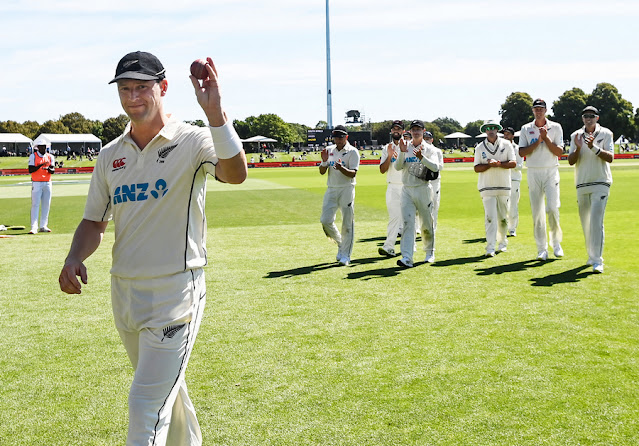
We recently saw a spinner Ajaz Patel perform so well taking 10/119 at India, and have experienced Richard Hadlee taking 7/23 against us – today at Christchurch Matt Henry broke South Africa with a spell of 7/23 – bundling out SA for 95. Matt Henry claimed a career-best 7-23 as New Zealand bundled out South Africa for 95 in two sessions to take charge of the opening Test in Christchurch today.

Playing his first Test in eight months because Trent Boult is away on paternity leave, Henry celebrated his return by registering the joint third-best test figures ever by a New Zealander.”Great to do it in front of my home fans, friends and family,” Henry said at the innings break. The visitors were 44 for four by lunch after their top-order had no answer to the relentless New Zealand attack. Henry and fellow pacemen Tim Southee and Kyle Jamieson extracted considerable movement in the air and bounce off the pitch, hitting their line and length repeatedly and earning ample reward for their efforts. The first four wickets were caught by the wicketkeeper or the slips cordon.

Matt Henry's career-best  including three wickets in the same over, saw South Africa dismissed for 95 - their lowest total in 23 Tests and lowest against New Zealand on the opening morning in Christchurch. No South African batter scored more than Zubayr Hamza's 25 and the highest partnership was 33 between Hamza and Kyle Verreynne to mark the first time they have been bowled out for under 100 batting first since 1932.

Henry, who has not played in New Zealand's last five Tests and came in as a replacement for Trent Boult, ran through South Africa's top order as the hosts made full use of bowler-friendly conditions on the opening morning in Christchurch. With swing through the air and plenty of seam movement on offer, South Africa's top four were all dismissed for 15 runs or fewer to leave them reeling at 44 for 4. Henry then returned after lunch to claim four more, and leave South Africa shellshocked.

Interesting !

With regards – S. Sampathkumar
17.2.2022.